1.Introduction
Offshore construction is often complex and unpredictable. Projects take place in deep water, soft ground, and areas with strong currents.
standard excavators struggle in these conditions. They lack both reach and stability, which can lead to delays and safety risks.
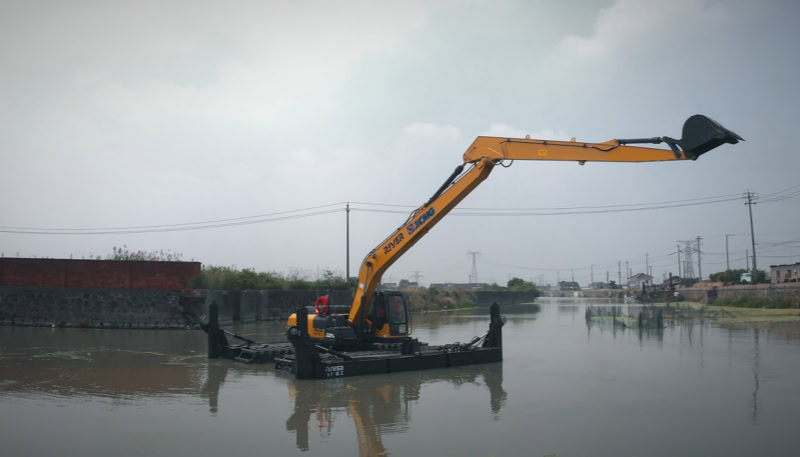
An extended arm combined with positioning piles offers a reliable solution. This system improves working range, machine stability, and overall control. Offshore and amphibious projects use it widely.
2.Challenges in Offshore Excavation
Working offshore brings several challenges. Water depth can change quickly, and the ground is often unstable.
- Traditional excavators face key limitations:
- Limited reach in deep or wide areas
- Poor stability on soft or shifting soil
- Frequent repositioning that reduces efficiency
Because of these issues, using an extended arm with positioning piles has become essential for modern offshore work.
3.How the System Works
Extended Arm: Increasing Reach
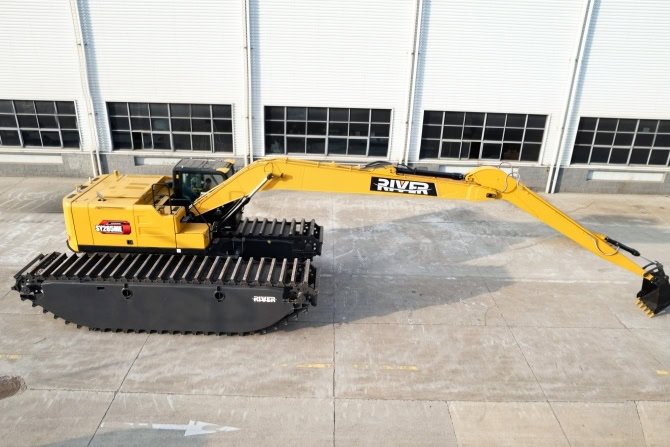
An extended arm allows the excavator to reach farther and dig deeper than a standard configuration. This is especially useful in offshore projects where access is limited.
The machine can stay on stable ground or a fixed platform. This reduces movement and lets you complete more work from one position.
Positioning Piles: Improving Stability
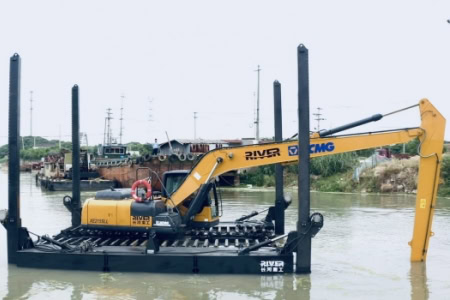
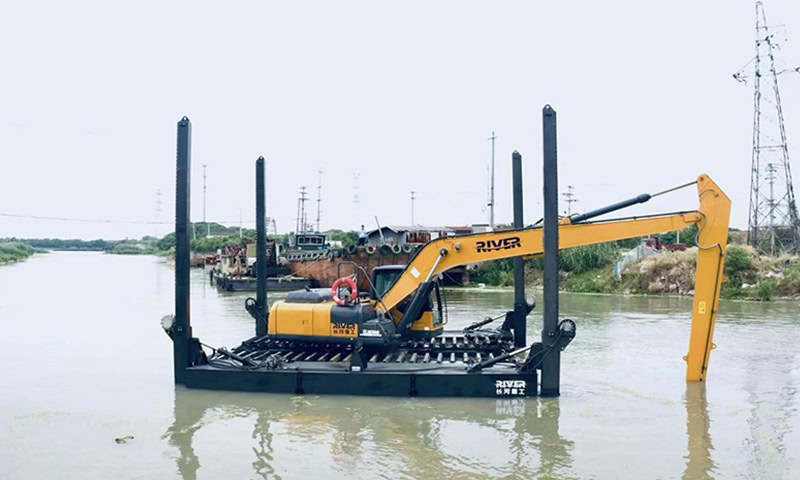
Positioning piles act as strong anchors. They secure the machine and reduce movement caused by waves, currents, or soft soil.
This creates a stable working base, which is critical for accurate and safe operations in offshore environments.
4.Key Benefits of Extended Arm with Positioning Piles
Enhanced Stability and Safety
With positioning piles, the excavator remains firmly in place during operation. This reduces the risk of drifting, tilting, or sinking in soft ground. Combined with the extended arm, operators can work farther from unstable areas. This improves safety and control.
Increased Reach and Efficiency
The extended arm greatly expands the working range. Operators can cover a larger area without moving the machine frequently. This saves time, reduces fuel consumption, and allows continuous operation even in challenging conditions.
Lower Operational Costs
By reducing repositioning and improving efficiency, this system helps lower overall project costs. Less downtime and fewer machine adjustments mean faster project completion and better resource use.
5.Applications in Offshore and Amphibious Projects
River Dredging and Sediment Removal
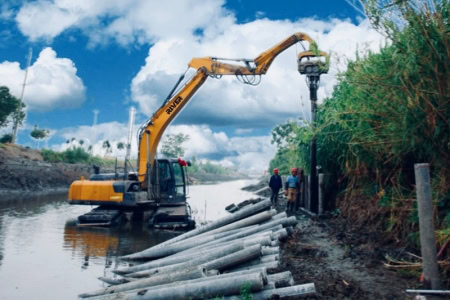
In dredging projects, an extended arm allows excavation from the riverbank or a barge. Positioning piles keep the machine stable, even in flowing water. This ensures consistent performance and reduces the need for temporary structures.
Amphibious Excavation in Wetlands
Wetlands and shallow water areas often have weak ground conditions. Positioning piles provide the support needed to prevent sinking, while the extended arm handles long-distance excavation. This makes the system ideal for amphibious work.
Bridge Construction and Underwater Maintenance
The system is widely used for bridge foundations, pier construction, and underwater repair. Stability from positioning piles ensures precision. The extended arm reaches deeper or hard-to-reach areas without moving the base machine.
6.Conclusion
The combination of an extended arm and positioning piles is an effective solution for offshore construction challenges.
It improves reach, stability, and efficiency while reducing safety risks. For contractors working in complex environments, this system offers a practical and reliable way to achieve better results.